
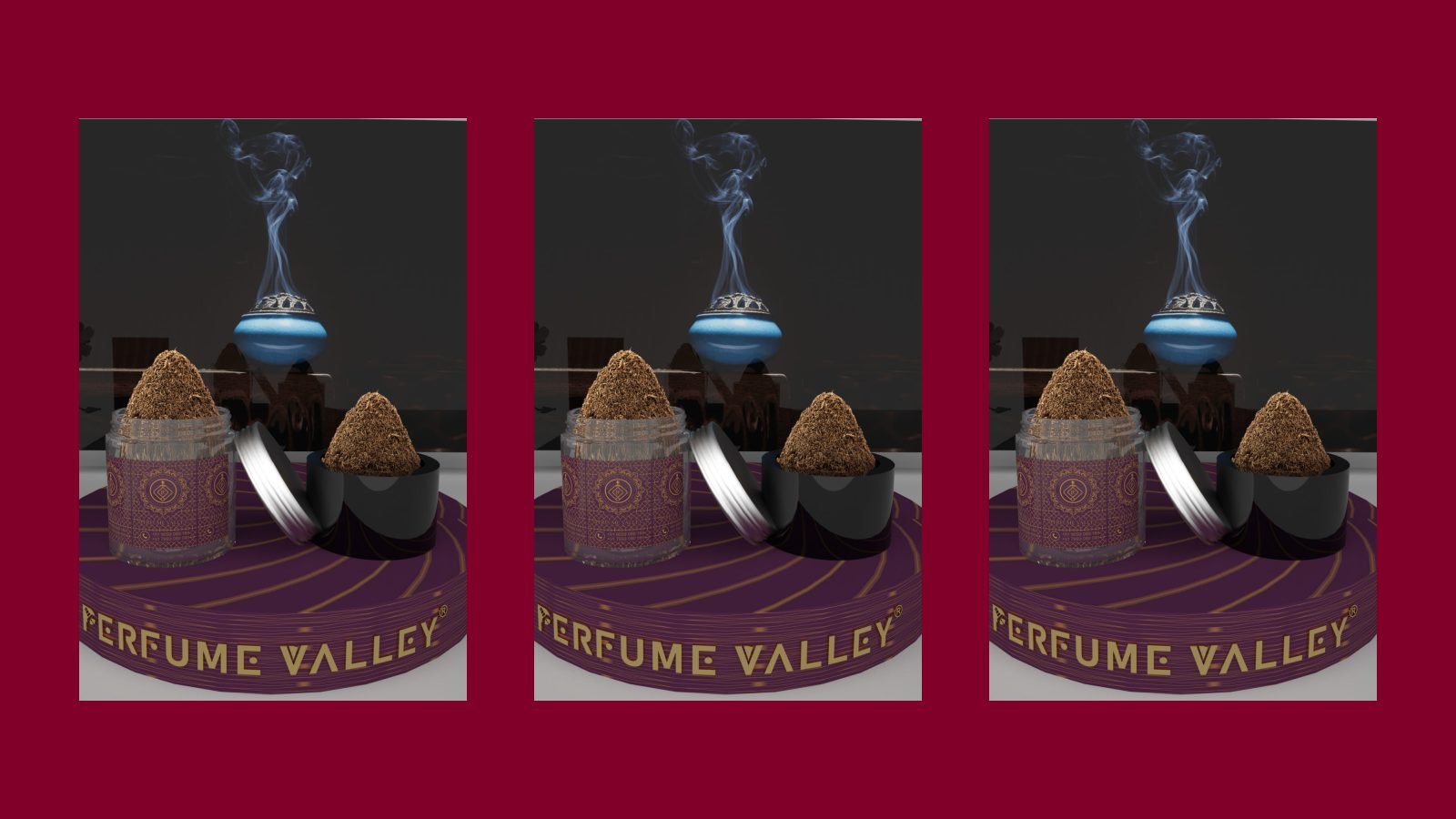
Walk through any Hyderabad neighbourhood in the evening and you will smell all three: a stick of agarbatti by the door, a thick curl of dhoop after pooja, and somewhere, the sweet, woody smoke of bakhoor on a burner. They all scent a room with smoke, but they are made differently, burn differently and suit different jobs. This guide looks at bakhoor vs agarbatti vs dhoop so you can pick the right one for your home.
What each one is
Bakhoor
Bakhoor is scented wood chips. The chips are soaked in fragrant oils and blended with ingredients such as resins, musk and sugar, then left to absorb them. It does not burn by itself. You heat small pieces on a glowing charcoal disc or an electric burner, and the heat releases a rich, fragrant smoke. We explain the full method in what bakhoor is and how to use it, and step by step in bakhoor jalane ka tarika (Hindi).
Agarbatti
Agarbatti is the incense stick most Indian homes grew up with. A thin bamboo stick is coated with a paste, usually made from charcoal or wood powder, natural gums and fragrance, then dried. You light the tip, blow out the flame, and it smoulders slowly along its length, giving off a thin, steady line of smoke.
Dhoop
Dhoop is incense without the bamboo core. The fragrant material, typically a mix of resins, herbs, wood powder and oils, and in some traditional recipes ghee or cow dung, is pressed into thick sticks, cones or small cakes. Because there is more material and no stick, dhoop usually gives denser smoke and a stronger scent than agarbatti.
Bakhoor vs agarbatti vs dhoop, side by side
| Bakhoor | Agarbatti | Dhoop | |
|---|---|---|---|
| What it is | Oil-soaked wood chips | Bamboo stick coated with incense paste | Solid incense stick, cone or cake, no core |
| How you burn it | On hot charcoal or an electric burner | Light the tip, it smoulders on its own | Light the tip, it smoulders on its own |
| Smoke | Dense bursts on charcoal, much less on an electric burner | Light, thin, steady | Thicker than agarbatti |
| Scent strength | Rich and heavy; you control it by adding more or less | Gentle to moderate | Strong |
| How long the scent stays | Clings to curtains, cushions and clothes for hours | Fades fairly soon after the stick goes out | Stays in the room longer than agarbatti |
| Kit needed | Burner, plus charcoal and tongs or an electric burner | A stand or holder | A heatproof dish or stand |
| Best for | Scenting clothes, hair and soft furnishings; welcoming guests | Daily pooja, small rooms, a light background scent | Pooja, festivals, larger rooms and courtyards |
Which suits your space
A small flat or a single room
Here the bakhoor vs agarbatti choice is simple: agarbatti is the easiest. One stick in a room with a window open gives a pleasant scent without filling the air with smoke. If you love bakhoor, an electric burner is far better than charcoal in a small space, because it heats the chips gently and gives much less smoke. Our comparison of electric vs charcoal bakhoor burners goes into this in detail. Dhoop can feel heavy in a small closed room.
A large hall, courtyard or function
Here you need more scent, so dhoop or bakhoor on charcoal comes into its own. For weddings, milads, housewarmings and festival gatherings, many families burn bakhoor near the entrance so guests walk in through the fragrance. A few agarbatti sticks spread around a big hall also work, but they will be gentler.
Clothes and hair
Bakhoor is made for this job. Its smoke is rich and oily, and it settles into fabric so a kurta, dupatta or shawl carries the scent through the day. Hold the garment well above the burner so the smoke passes through it, or hang clothes in a room where bakhoor has been burning. If you want to go further, pair bakhoor-scented clothes with an attar on your skin.
Pooja or everyday home fragrance
For daily pooja, agarbatti and dhoop are the familiar choices in most Hindu homes, and many families use both: agarbatti morning and evening, dhoop for special days and festivals. For prayer and quiet reflection in any faith, choose a scent that is calm rather than loud; our guide to attars for pooja and prayer follows the same idea for fragrance you wear.
For making the whole home smell good, especially before guests arrive or on Fridays and festival days, bakhoor is hard to beat because its scent lingers in soft furnishings long after the burner is cold. Many homes use agarbatti every day and bakhoor when they want the house to feel special.
What we stock
Our bakhoor comes in 250g and 500g packs:
- PV Bukhoor Malaki (from ₹249), an oud bakhoor with amber, sandalwood, tobacco and vanilla.
- PV Bukhoor Arais (from ₹249), warm and woody, with spice, vanilla, cedar and amber.
- PV Bukhoor Khas (from ₹399), an oriental, amber-style bakhoor.
- PV Bukhoor Al Layl (from ₹249).
Our incense sticks come in 200g packs from ₹499, including PV Oud Zafran, PV Oud Vanilla and PV Bakhoor, which despite its name is a stick you light, not chips for a burner. Sticks are the simplest way to get an oud-style scent into a room without any burner at all.
Burning any of them safely
All three produce smoke, and smoke indoors is something to be sensible about. The US Environmental Protection Agency lists incense among the sources of indoor particles and advises good ventilation when you burn it. A few habits help:
- Keep a window or door open while you burn, and air the room afterwards.
- Use a stable, heatproof holder or burner on a flat surface, away from curtains, papers and anything that can catch fire.
- Never leave burning incense, dhoop or hot charcoal unattended, and put it out before you sleep or leave home.
- Keep burners, charcoal and lit sticks out of reach of children and pets. Charcoal and bakhoor burners stay hot for a while after use.
- Let ash cool completely before throwing it away.
- If anyone at home has asthma or another breathing condition, ask your doctor before burning incense around them.
Questions people ask
What is the difference between bakhoor and agarbatti?
Bakhoor is loose, oil-soaked wood chips that you heat on charcoal or an electric burner. Agarbatti is a bamboo stick coated with incense paste that you light and leave to smoulder. Bakhoor gives a richer smoke that clings to fabric; agarbatti gives a lighter, steady scent with no kit needed.
Is bakhoor better than agarbatti?
Neither is better, they do different jobs. Bakhoor is the choice for scenting clothes, hair and soft furnishings and for making a room smell rich before guests arrive. Agarbatti is simpler and gentler, and suits daily pooja and small rooms.
What is dhoop made of?
Dhoop is typically made from resins, herbs, wood powder and fragrant oils, and some traditional recipes add ghee or cow dung. The mix is pressed into thick sticks, cones or cakes with no bamboo core, which is why it burns with more smoke and a stronger scent than agarbatti.
Which incense is best for home?
For a small flat and everyday use, agarbatti or bakhoor on an electric burner keeps smoke low. For a large hall or a festival, dhoop or bakhoor on charcoal fills the space better. For clothes, use bakhoor. Whatever you choose, burn it with a window open.
Can I burn bakhoor without charcoal?
Yes. An electric bakhoor burner heats the chips on a plate with no flame or charcoal and gives less smoke, which makes it easier to use in flats.