
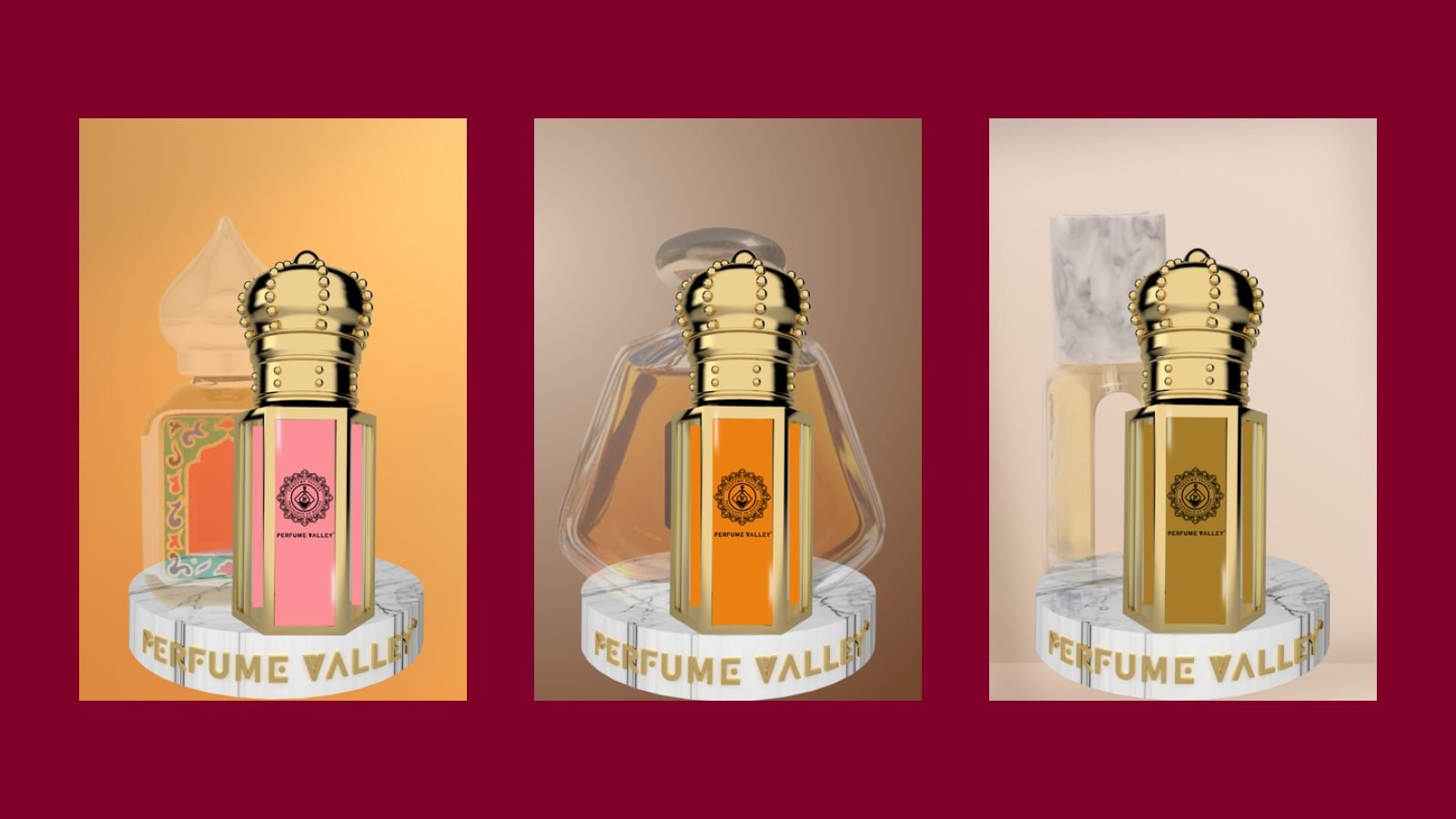
“Is this asli?” is probably the most common question at any attar counter, in Hyderabad or anywhere else. It is a fair question. Attar prices run from under a hundred rupees to many thousands, and the labels do not always help. This guide shows you how to identify real attar: what the words on the bottle really mean, which home checks tell you something useful, and which viral tests you can safely ignore.
What the words on the label actually mean
Most confusion starts here. The same word can mean very different things depending on who is selling.
- Attar. Traditionally, an attar is made by distilling flowers, herbs or spices in a copper still (the deg) and letting the scented steam condense into a receiving vessel (the bhapka) that holds a base oil, usually sandalwood. Kannauj in Uttar Pradesh still works this way. Today the word is also used, loosely, for any alcohol-free perfume oil.
- Pure. In the attar trade, “pure” usually means “no alcohol and no water”. It does not, on its own, mean natural. A fully synthetic oil can honestly be called pure in this sense.
- Concentrated. “Concentrated perfume oil” simply means the fragrance has not been diluted in alcohol the way a spray is. It tells you about strength and format, not about what the oil is made of.
- Ruh. Ruh means soul or essence. In the traditional sense, a ruh is the distilled oil of a single plant with no base oil added, such as ruh gulab from rose or ruh khus from vetiver root. Once rose is distilled into sandalwood oil, it becomes an attar of rose, not a ruh. “Ruh” is also used as a product name, so it is worth asking what a particular bottle contains.
- Natural. This should mean the scent comes from plant materials rather than lab-made aroma chemicals. There is no single rule that every seller follows, so the word is only as good as the shop using it.
- Synthetic. Made with aroma materials created or refined in a lab. Most attars sold today, at every price, are blends of synthetic and natural materials in an oil base.
If you want the story behind names like majmua, shamama and hina, our guide to traditional attars covers them one by one.
Synthetic does not mean fake
This is the part most “real vs fake” advice gets wrong. A fake attar is one sold as something it is not: a cheap blend sold as pure ruh gulab, or a thin oil sold as aged oud. A synthetic attar sold honestly, at an honest price, is not fake at all.
Some of the most loved scents cannot be made any other way. The clean white musks people wear every day are built on synthetic musk materials, and that is exactly why they smell the way they do. Our guide to white musk and black musk explains the difference. A well-made everyday blend such as PV Majmua Attar (from ₹99) is not pretending to be a single-flower distillate, and it does not need to.
So the real question is not “natural or synthetic?” It is “does what I am paying match what I am being told?”
How to identify real attar: simple checks at home
None of these will give you a lab result. Together, they tell you a lot.
- The blotter test, used properly. Put a drop on a strip of plain paper and smell it at the start, after an hour and again after four or five hours. Ignore the stain. You are smelling how the scent changes. Natural materials usually shift as they dry, with a different character at the start and at the end. A scent that smells identical from the first minute to the last is more likely to be a simple blend.
- How it wears on you. Apply a small amount to your inner wrist and live with it for a day. A good attar sits close to the skin and fades gradually. If it vanishes in half an hour, or turns sour and harsh, that tells you something about quality, whatever the label says.
- The alcohol whiff. Open the bottle and smell the cap. An attar should not have the sharp, spirit-like sting of a spray. If it does, it is not an attar in the traditional sense, however it is labelled. Our guide to attar vs EDP, EDT and extrait explains how oils and sprays differ.
- Clarity. Hold the bottle up to the light. A good oil is clear, even when it is coloured. Colour varies naturally, from pale gold to green to deep brown, so colour alone proves nothing. Cloudiness, layers that separate, or bits floating in the oil are reasons to ask questions.
- Price sanity. This is the most reliable check of all, and the next section explains why.
Why real attar is expensive
Natural materials are scarce, slow to grow and hard to extract. A few examples show the scale:
- Rose gives up very little oil. Growers’ guides put it at roughly three to four thousand kilos of petals for one kilo of rose oil.
- Indian sandalwood, the classic attar base, is listed as a vulnerable species, and a tree needs twenty years or more before its heartwood is worth harvesting.
- Oud forms only in agarwood trees that have been wounded and infected, and only a small share of wild trees ever produce it.
So if someone offers you “pure ruh gulab” or “real oud oil” for the price of a cup of chai, the maths does not work. It may still smell pleasant. It is just not what the label says.
Popular “tests” that prove nothing
You will find these on social media. They sound scientific, but none of them can tell a natural attar from a synthetic one.
- The burning test. Setting a drop or a soaked cotton wick alight shows only that the liquid burns. Plant oils, synthetic oils and alcohol all burn. It is also an easy way to start a fire, so please do not try it.
- The water test. Oil and water do not mix, so almost any attar, natural or synthetic, will float as droplets on water. That is basic chemistry, not proof of purity.
- The “no oily ring” test. This comes from essential-oil advice, and even there it is unreliable. Many attars are made in a sandalwood or other oil base, so they are supposed to leave a mark. Some cheap diluents evaporate completely and leave no mark at all.
- The freezer test. Many genuine natural oils turn thick or cloudy in the cold. It does not separate real from fake.
The only method that truly identifies what is in an oil is laboratory analysis, known as GC-MS. For everyday buying, the practical answer is a shop you can trust and a nose you have trained.
The best test: smell before you buy
Your nose improves quickly with comparison. Smell a natural rose next to an ordinary rose blend and the difference becomes obvious in a way no article can describe. That is why buying where you can test matters more than any trick. If you are shopping around the city, our Hyderabad perfume market guide is a good place to start.
At our three Hyderabad shops, in Mehdipatnam, Tolichowki and Shaikpet, you can try attars on paper or on your skin before you decide. We are open every day from 11am to 11pm, and you can find the nearest store here. Our natural attars sit in their own section, separate from our everyday blends, so you always know which is which.
If you want to learn what natural materials smell like, start with a small bottle from our natural attars: PV Ruh Khus Attar (from ₹369) for earthy vetiver, PV Ruh Sandal Attar (from ₹499) for creamy sandalwood, and PV Ruh Gulab Luxe Attar (from ₹749) or PV Ruh Jasmine Attar (from ₹749) for flowers. Natural oils can irritate sensitive skin, so do a small patch test first and speak to a doctor if you have skin concerns.
Questions people ask
How to identify real attar?
Check that it smells of oil, not alcohol. Test it on paper and skin over several hours and notice whether the scent develops. Make sure the price makes sense for what is claimed. Most of all, buy from a shop that lets you smell before you pay and tells you honestly which attars are natural and which are blends.
Asli itra ki pehchan kaise kare?
Smell the open bottle for a sharp alcohol note, then wear it on a paper strip and your wrist for a few hours and see how it changes. Be wary of very cheap “pure” ruh or oud. Ignore the fire and water tests. We have written this guide in Hindi too: asli itra ki pehchan kaise karein.
Is concentrated attar pure?
“Concentrated” means the oil is not diluted in alcohol. It says nothing about whether the ingredients are natural or synthetic. A concentrated attar can be entirely natural, entirely synthetic, or a blend, so ask the seller what it contains.
Why is real attar expensive?
Because natural materials are scarce and yield very little oil. Rose needs thousands of kilos of petals for one kilo of oil, Indian sandalwood takes decades to mature, and genuine oud forms in only a small share of trees. Traditional distillation is also slow, skilled work.
Does the burning test show if attar is pure?
No. Natural oils, synthetic oils and alcohol all burn, so a flame tells you nothing about what is in the bottle. It is also a real fire risk. How the scent changes over time, and a sensible price, are far better guides.