
Walk into any perfume shop and you meet a string of French initials: EDC, EDT, EDP, extrait. Then there is attar, which plays by different rules altogether. If you only want the quick answer on attar versus spray, read the short version. This guide goes one level deeper: what each label really means, how attar vs EDP compares on your skin, why the carrier matters as much as the strength, and which one to reach for in Indian weather.
The concentration ladder
Every spray perfume is a mix of aroma oils and a carrier, almost always alcohol with a little water. The French names describe roughly how much aroma oil is in the mix. Here is how they compare, with attar alongside for reference.
| Type | Typical aroma oil | Carrier | How it tends to wear |
|---|---|---|---|
| Eau de Cologne (EDC) | About 2 to 5% | Alcohol and water | Light and fresh, fades fastest |
| Eau de Toilette (EDT) | About 5 to 15% | Alcohol and water | Bright opening, noticeably lighter within a few hours |
| Eau de Parfum (EDP) | About 10 to 20% | Alcohol, a little water | Fuller and rounder, lasts longer on skin |
| Parfum or Extrait | About 15 to 30%, sometimes more | Alcohol | Richest of the sprays, sits closer, lasts longest |
| Attar | Not measured on this scale | Oil, no alcohol | Close to the skin, slow and steady |
Two things to keep in mind. First, these ranges are trade conventions, not laws. No international rule fixes them, which is why different sources quote slightly different numbers and why the ranges overlap. Second, the label tells you the category, not the quality. A well-made EDT can outlast a careless EDP, and the materials inside matter as much as the percentage.
Alcohol or oil: why the carrier matters
The biggest difference between an attar and any spray is not strength. It is what carries the scent.
Alcohol evaporates quickly. When you spray, it lifts the fragrance off your skin and into the air, which is why a spray feels big and bright in the first half hour. Once the alcohol has gone, what remains is the aroma oil, and that fades at its own pace.
Oil barely evaporates at all. An attar has no alcohol to launch it into the air, so it releases its scent slowly from the skin. The opening is gentler, the scent stays closer to you, and it tends to keep going long after a spray has softened. Traditional attars were made this way for centuries, distilled into a base such as sandalwood oil.
Attar vs EDP: which lasts longer?
The answer depends on what you mean by “lasts”. Longevity and projection are not the same thing, and people often mix them up.
- Projection is how far the scent travels from you. Sprays usually win here, especially in the first hour.
- Longevity is how long the scent stays on your skin. Attars often win here, because oil holds on.
So when someone says an attar is “stronger”, they usually mean it lasts longer and smells dense up close. When someone says a spray is “stronger”, they usually mean people across the room noticed it. Both can be true of the same scent in two formats. If a scent vanishes on you faster than on a friend, read why perfume fades on your skin.
Which one for Indian heat, the office and weddings
Hot, humid days
Heat speeds up evaporation, so every fragrance behaves louder and shorter in a Hyderabad May than in December. On hot days, go lighter rather than stronger. A fresh EDP used with a light hand, or a small dab of a fresh attar, will feel pleasant for longer than a heavy extrait-style scent that turns cloying by noon.
Office and close quarters
In an air-conditioned office or a shared cab, you want something people notice only when they are near you. A dab of attar on the wrists, or one or two sprays of EDP, is usually right. Our guide to perfume for office, parties and travel has more on reading the room.
Weddings and long evenings
A nikah, sangeet or reception can run late into the night in a crowded hall. Here the two formats work well together: attar on the skin for staying power, and a spray of EDP for presence when you arrive. Oils can mark delicate fabric, so keep attar on skin rather than on silk. The wedding perfume guide covers what to wear for each function.
How our formats map to these names
At Perfume Valley we keep it simple:
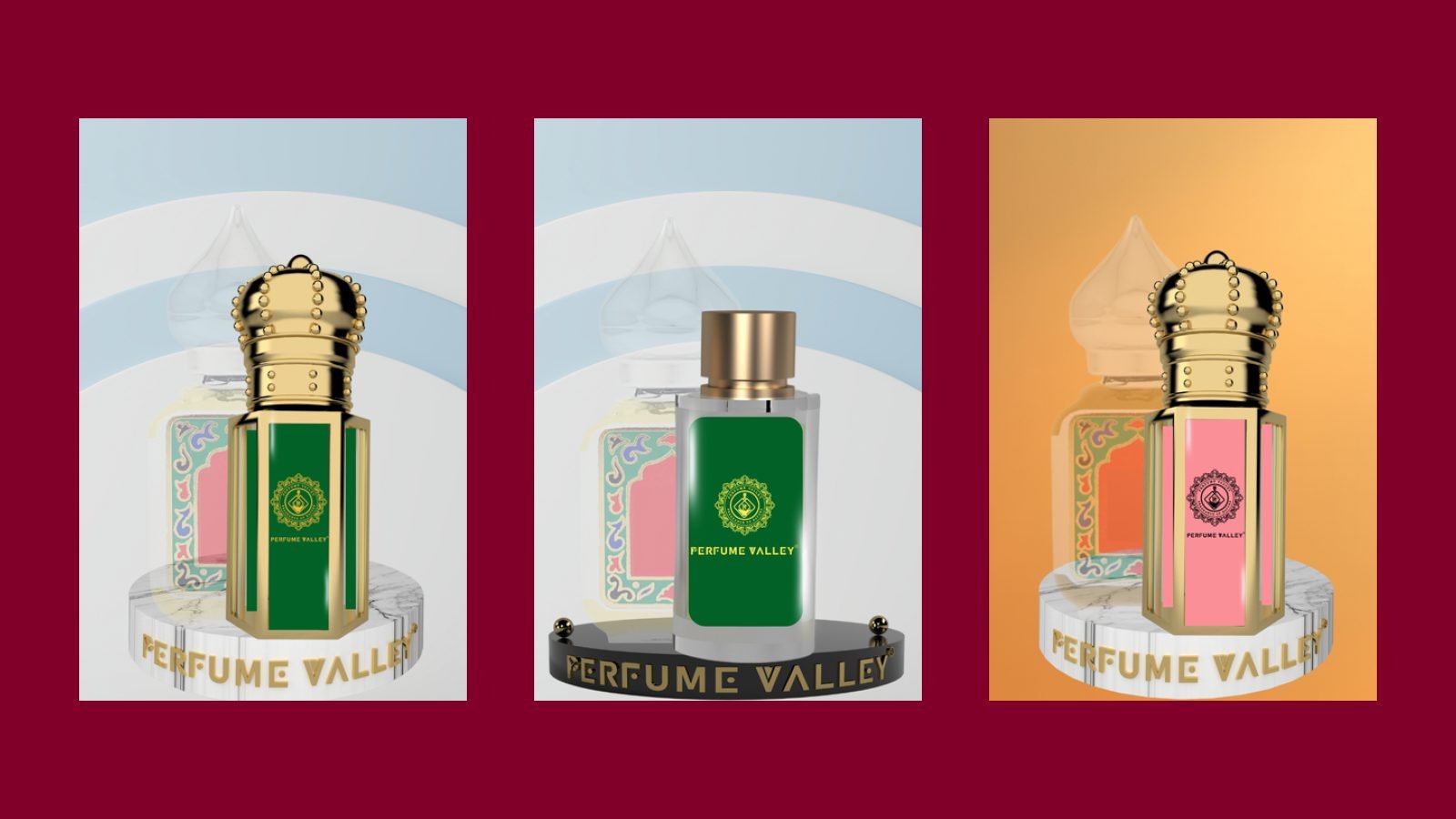
- Attar is our alcohol-free perfume oil, in 3ml, 6ml, 12ml and 24ml sizes.
- Pure Perfume is our name for Eau de Parfum sprays. Like every spray, they are alcohol-based. You can browse them all in perfumes.
Many of our scents come in both formats, which is the easiest way to feel the difference for yourself. Try the same scent both ways:
- Rose: PV Ruh Gulab Attar (from ₹299) and PV Ruh Gulab Pure Perfume (from ₹499).
- A classic Indian blend: PV Majmua Attar (from ₹99) and PV Majmua Pure Perfume (from ₹249).
- Oud with rose and saffron: PV Oud Aswad Attar (from ₹499) and PV Oud Aswad Pure Perfume (from ₹999).
Wear the attar on one wrist and the spray on the other and smell both through the day. You will learn more in one afternoon than from any chart. If you are in Hyderabad, you can also try both formats side by side at any of our three stores.
Questions people ask
Is EDP better than EDT?
Not better, just stronger and usually longer-lasting, because it has a higher share of aroma oil. EDT can be the smarter choice for hot days, daytime and the office, where a lighter touch is welcome. Choose by occasion and weather, not by the initials alone.
Attar vs EDP, which lasts longer?
On skin, attar usually lasts longer, because oil evaporates far more slowly than alcohol. An EDP usually projects further in the first hour or two. If you want a scent that stays with you all day without filling the room, attar is the better pick.
Is attar stronger than perfume?
It depends what you mean by strong. Attar is dense and long-lasting up close, but it does not throw scent across a room the way a spray does. Use a small amount: a dab or two is usually enough.
Does EDP or EDT have more alcohol?
EDT. Because it contains less aroma oil, a larger share of the bottle is alcohol and water. Extrait has the least alcohol of the sprays, and attar has none at all.
Can I wear attar and EDP together?
Yes. A common approach is attar on the skin first, then a light spray of EDP over it or on clothes. Pick scents that share a family, such as a rose attar with a rose or oud spray, so they blend rather than clash.