
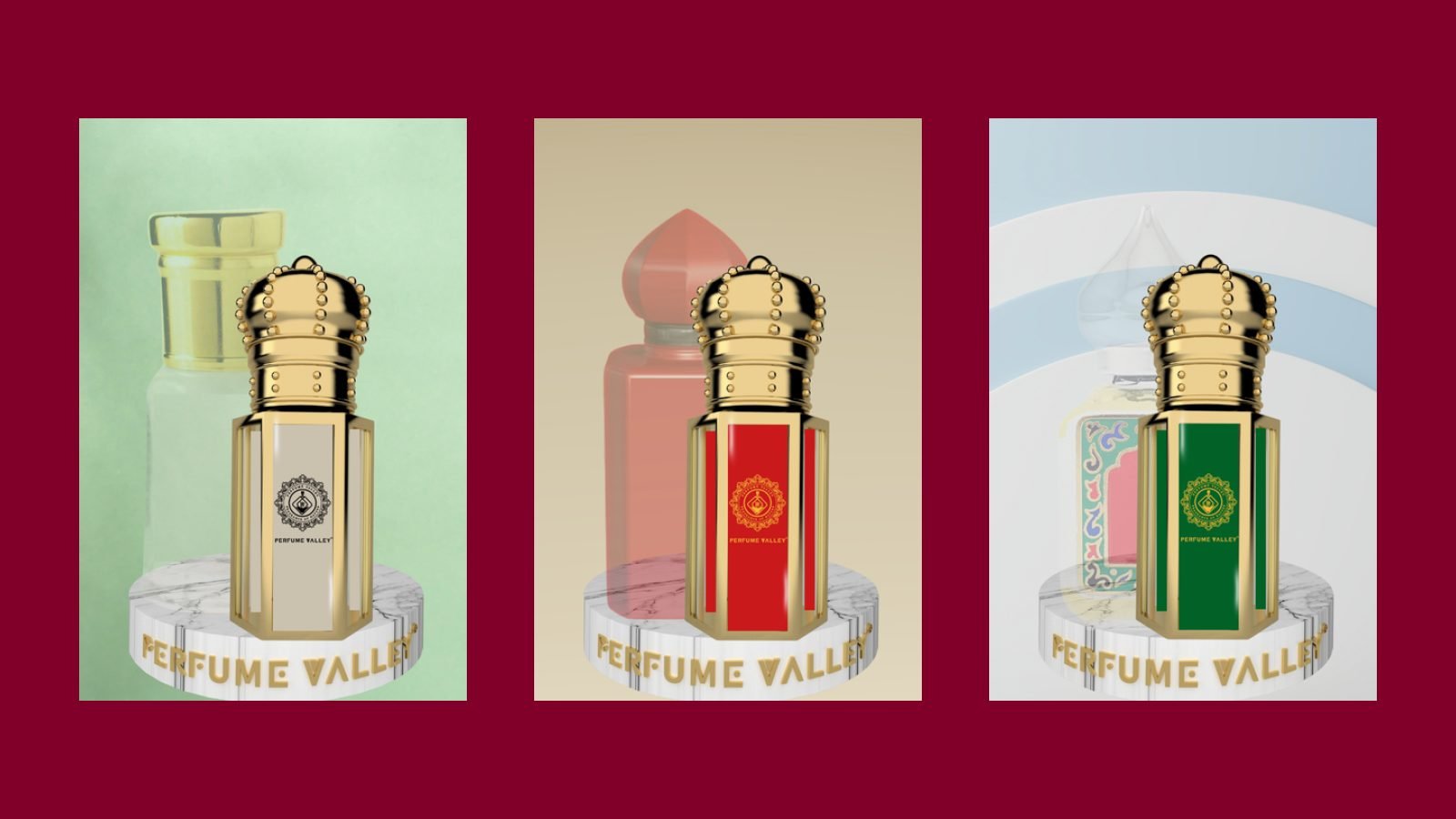
“Is attar halal?” is one of the questions we hear most often across the counter. It usually comes from someone who has been told that perfume sprays contain alcohol and wants to know where that leaves them, especially before prayer.
This guide explains why the question comes up, what attar actually is, how scholars have answered the question of alcohol in perfume, and how to choose if you would rather avoid it. We are a perfume shop, not a fatwa desk, so we describe the views and leave the ruling to your own scholar.
Why the question comes up
Almost every perfume spray in the world is made by dissolving perfume oils in alcohol. The alcohol carries the scent out of the nozzle as a fine mist and then evaporates off your skin within seconds. That is true of cheap body sprays and expensive bottles alike, and it is true of our own Pure Perfume range, which is alcohol-based like every spray.
For many Muslims, alcohol raises two separate concerns. Is it permissible to put on your body at all? And is it pure, so that skin and clothes carrying it are fit for prayer? People who avoid alcohol for other reasons, of faith or personal choice, often ask the same thing in different words.
Is attar halal? Start with what attar is
Attar is a perfume oil. The fragrance is carried in oil rather than alcohol, so there is nothing that flashes off the skin. You apply a small amount with the applicator or a fingertip and it stays close to the body for hours. Every attar we sell is alcohol-free. Our attar vs perfume page covers the wider differences in how the two wear.
So the short answer to “does attar contain alcohol” is no. Whether a particular attar suits you in every other way, its ingredients and how you wear it, is a separate matter.
What scholars say about alcohol in perfume
This is where views genuinely differ, and it helps to know the main lines of the discussion rather than one answer you happened to see on social media.
- The source of the alcohol matters, in one view. Many Hanafi scholars, including fatwas from Darul Uloom Deoband, distinguish alcohol made from grapes or dates from alcohol made from other sources such as grain, potato or petroleum. In this view, perfumes using the second kind are permissible to wear and prayer in them is valid. Some who hold this view still add that it is better to avoid them where you can.
- Avoid it, in another view. Other scholars advise against wearing alcohol-based perfume at all. A well-known answer from Shaykh Ibn Baz reasons that the alcohol in perfume is an intoxicant, and notes that there are enough permissible perfumes available that there is no need for it.
- Purity and prayer. Scholars also differ on whether alcohol is ritually impure. Some fatwas that treat it as impure advise against wearing alcohol-based perfume in prayer, because the body and clothes must be clean for prayer to be valid. Others consider perfume alcohol not impure and prayer in it valid.
These are summaries of positions published by established fatwa bodies, not our opinion. They reach different conclusions for reasons of method that matter to scholars. If this affects how you pray, please ask your own scholar or the imam of your masjid, and follow the school you already follow.
Fragrance in the Sunnah
Whatever view you follow on sprays, fragrance itself has a warm place in the Islamic tradition. A hadith in Sunan an-Nasa’i records the Prophet saying that perfume was among the things of this world made dear to him. Sahih al-Bukhari reports that he did not refuse gifts of perfume, and another narration in al-Bukhari mentions using perfume, if it is available, along with the bath and siwak on Friday.
Sahih Muslim describes musk as the best of perfume, and a narration about Ibn Umar mentions burning aloeswood, the wood we now call oud.
That is why many families keep an attar by the door for Jumu’ah and Eid, and why fragrance is a common gift in Ramadan. Our guide on attars for pooja and prayer covers choosing a gentle scent for places of worship across faiths.
Attar for women
Attar is worn by men and women alike, and our guide on who can wear attar covers that in full. On the faith side, scholars broadly agree that a woman may wear any fragrance she likes at home and among family. Views differ on scent in public.
- Some scholars, citing a hadith that warns women against wearing perfume that men notice as they pass, say a woman should avoid perfume outside the home altogether.
- Others say a light scent that does not spread beyond her, worn for freshness and not to draw attention, is not forbidden, though they may still regard it as better avoided.
- Many point to a narration describing women’s fragrance as one whose colour shows and whose scent is hidden, and read it as guidance towards soft, close-to-skin scents.
We are not in a position to tell you which view to follow. What we can say is practical: an attar applied as a single small dab sits much closer to the skin than a spray does. If you want something that stays with you rather than filling a room, oil is the gentler choice.
How to choose if you avoid alcohol
If you have decided to avoid perfume alcohol, choose attar and you do not need to think about it further. A few pointers:
- For everyday and prayer, clean, soft scents work well. PV Musk Tahara Attar (from ₹149) is a fresh musk, and PV Musk Rose Attar (from ₹149) pairs musk with a soft rose.
- For rose lovers, PV Ruh Gulab Attar (from ₹299) is a traditional floral rose oil.
- For oud, PV White Oud Attar (from ₹149) softens oud with white flowers and vanilla, while PV Oud Zafran Attar (from ₹149) is warmer, with saffron, honey and rose over oud.
- For Jumu’ah and Eid, PV Jannat Al Firdaus Attar (from ₹149) is a floral, musky blend with a soft oud base. Our guide to jannat al firdaus attar explains the name and how to wear it.
Browse the full attar collection for more. A 3ml bottle is the easiest way to try a scent before committing, and you are welcome to try attars in our Hyderabad stores before you buy. Once you have one, our guide on how to apply attar shows you where to put it so a little lasts all day.
If you already own sprays and your scholar has advised you to avoid them in prayer, a simple routine many people follow is to keep the spray for other times and wear attar for salah and the masjid.
Questions people ask
Is attar halal?
Attar is an alcohol-free perfume oil, so the alcohol question that arises with sprays does not arise with it. That is why many people who avoid alcohol choose attar. If you have a concern about a particular ingredient, ask your own scholar.
Is perfume with alcohol haram?
Scholars differ. Many Hanafi scholars, including Darul Uloom Deoband, permit perfume whose alcohol does not come from grapes or dates. Others, such as Shaykh Ibn Baz, advised avoiding alcohol-based perfume. Please ask your own scholar which view to follow.
Can I wear perfume while praying?
Wearing fragrance for prayer is widely encouraged. The question is only about alcohol-based sprays: some scholars say prayer in them is valid, others advise against it because they consider the alcohol impure. Wearing attar avoids the question entirely.
Is attar haram for women?
Attar is not haram for women in itself, and scholars agree a woman may wear fragrance at home. Views differ on wearing scent in public, from avoiding it completely to allowing a light scent that does not spread. Ask your own scholar or a trusted elder.
Do your Pure Perfume sprays contain alcohol?
Yes. Like all perfume sprays, our Pure Perfume range is alcohol-based. If you want to avoid alcohol, choose from our attars, which are all alcohol-free.